Welcome Message
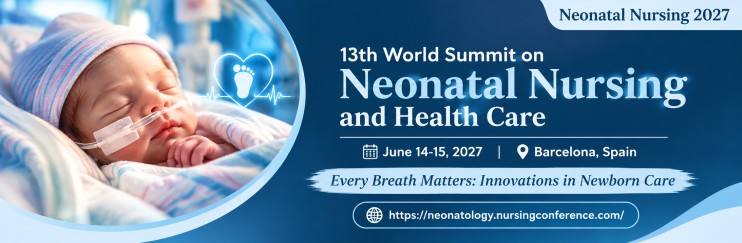
Welcome to the 13th World Summit on Neonatal Nursing and Health Care, taking place on June 14–15, 2027, in Barcelona, Spain, under the theme “Every Breath Matters: Innovations in Newborn Care.” This global summit brings together neonatal nurses, neonatologists, pediatricians, researchers, academicians, and healthcare professionals to share knowledge, research, and clinical expertise. The event provides an excellent platform to explore the latest innovations, emerging technologies, and evidence-based practices in neonatal nursing and newborn healthcare. Through keynote lectures, scientific presentations, interactive discussions, and networking opportunities, participants can exchange ideas and build meaningful collaborations. We warmly welcome you to Barcelona for an inspiring and impactful gathering dedicated to advancing neonatal care and improving newborn health outcomes.
Target Audience :
-
Neonatal Nurses
-
Neonatologists
-
Pediatricians
-
Neonatal Nurse Practitioners
-
Pediatric Nurses
-
Maternal and Child Health Professionals
-
Perinatal Care Specialists
-
Neonatal Intensive Care Unit (NICU) Professionals
-
Pediatric Critical Care Specialists
-
Obstetricians and Gynecologists
-
Midwives
-
Neonatal Researchers
-
Child Health Researchers
-
Neonatal Nutrition Specialists
-
Respiratory Care Specialists
-
Neonatal Pharmacists
-
Clinical Healthcare Professionals
-
Nursing Academicians
-
Nursing Educators
-
Postgraduate Scholars
-
Nursing Students
-
Healthcare Administrators
About the Conference
The 13th World Summit on Neonatal Nursing and Health Care, (NEONATAL NURSING 2027) scheduled for June 14–15, 2027, in Barcelona, Spain, is a premier international gathering of neonatal nurses, neonatologists, pediatricians, researchers, academicians, and healthcare professionals dedicated to the theme “Every Breath Matters: Innovations in Newborn Care.” The conference will highlight the latest research, innovative technologies, emerging trends, and evidence-based practices in neonatal nursing and newborn healthcare. It serves as a dynamic platform for knowledge exchange, professional collaboration, and networking through keynote lectures, scientific presentations, panel discussions, workshops, and interactive sessions. Participants will have the opportunity to engage with global experts, share clinical insights, and explore innovative approaches aimed at advancing neonatal care and improving health outcomes for newborns worldwide.
Why to Attend?
Attending the 13th World Summit on Neonatal Nursing and Health Care (NEONATAL NURSING 2027) offers a valuable opportunity to gain insights into the latest research, innovations, and advancements in neonatal nursing and newborn healthcare. Participants will learn from leading global experts through keynote lectures, scientific presentations, panel discussions, and interactive sessions while exploring emerging technologies and evidence-based practices in neonatal care. The summit also provides an excellent platform for networking, knowledge exchange, professional development, and collaboration, bringing together neonatal nurses, neonatologists, pediatricians, researchers, academicians, and healthcare professionals to share ideas and develop meaningful partnerships focused on improving newborn health outcomes worldwide.
Sessions And Tracks
Neonatal nursing provides specialized care for newborns during the critical period immediately after birth and throughout early development. It focuses on newborn assessment, physiological adaptation, vital-sign monitoring, thermoregulation, feeding, infection prevention, and family support. Evidence-based nursing practices help healthcare professionals identify complications at an early stage and provide appropriate interventions. The field also emphasizes compassionate, individualized care to promote healthy growth and development. Advances in neonatal nursing continue to improve safety, quality of care, and newborn outcomes.
-
Newborn Assessment & Evidence-Based Nursing
-
Family-Centered Newborn Care
-
Neonatal Monitoring & Clinical Practice
Neonatal and pediatric intensive care focuses on the management of critically ill, premature, and high-risk infants and children requiring continuous medical supervision. It covers advanced monitoring, respiratory support, emergency interventions, and life-support technologies. Multidisciplinary collaboration is essential for managing complex and rapidly changing clinical conditions. Modern intensive care practices aim to improve survival while reducing complications associated with critical illness. The field also emphasizes patient safety, infection prevention, and quality improvement.
-
Advanced NICU & Pediatric Intensive Care
-
Critical Monitoring & Life Support
-
Emergency Stabilization & Critical Care
Respiratory disorders are among the most common challenges encountered in premature and critically ill newborns. This area focuses on respiratory distress, oxygen therapy, surfactant treatment, non-invasive ventilation, and mechanical ventilation. It also includes respiratory diseases affecting infants and children and advances in pediatric pulmonary care. Early recognition and appropriate respiratory support can significantly improve clinical outcomes. New approaches aim to provide effective ventilation while minimizing lung injury and long-term complications.
Premature and low birth weight infants require specialized care because of immature organ systems and increased vulnerability to complications. This area addresses respiratory difficulties, nutritional challenges, temperature regulation, infection risks, and developmental concerns. Appropriate neonatal interventions can support healthy growth and reduce long-term complications. Developmental follow-up is particularly important for monitoring neurological, physical, and behavioral outcomes. Research continues to improve strategies for protecting and supporting high-risk infants.
-
Preterm & Extremely Preterm Infant Care
-
Low Birth Weight Management
-
Growth & Developmental Support
Infections can cause serious complications in newborns, infants, and children and require rapid recognition and appropriate treatment. This area explores neonatal sepsis, respiratory infections, meningitis, healthcare-associated infections, and other pediatric infectious diseases. Infection prevention and control remain essential components of safe clinical practice. Appropriate antimicrobial use and stewardship can help reduce resistance and improve treatment outcomes. New diagnostic approaches are also supporting earlier detection of serious infections.
-
Neonatal Sepsis & Pediatric Infections
-
Infection Prevention & Control
-
Antimicrobial Therapy & Stewardship
Neurological health plays a major role in the long-term development and quality of life of newborns and children. This area covers neonatal seizures, hypoxic-ischemic brain injury, neurological disorders, developmental delays, and pediatric neurological conditions. Early assessment and neuroprotective interventions can help reduce the impact of neurological injury. Developmental monitoring allows healthcare professionals to identify concerns and provide timely intervention. Advances in pediatric neurology are improving understanding, diagnosis, and long-term care.
-
Neonatal Neurological Disorders & Seizures
-
Neuroprotection & Early Intervention
-
Pediatric Neurology & Development
Adequate nutrition is fundamental for growth, immunity, brain development, and recovery during infancy and childhood. This area covers breastfeeding, human milk, enteral and parenteral nutrition, feeding difficulties, and nutritional support for premature infants. Individualized nutritional plans can help promote healthy growth and reduce complications. Pediatric nutrition also addresses dietary requirements throughout childhood. Current approaches emphasize evidence-based feeding strategies and long-term healthy development.
-
Breastfeeding & Human Milk Nutrition
-
Enteral & Parenteral Feeding
-
Pediatric Growth & Nutritional Support
Cardiovascular disorders can affect newborns, infants, children, and adolescents and may require specialized diagnosis and treatment. This area focuses on congenital heart diseases, neonatal cardiovascular instability, cardiac monitoring, and pediatric cardiac management. Early diagnosis and appropriate intervention are important for improving survival and quality of life. Advances in imaging and monitoring are strengthening pediatric cardiovascular assessment. Collaborative care between neonatology, cardiology, nursing, and surgery remains essential.
Maternal health, pregnancy conditions, and childbirth can strongly influence newborn health and developmental outcomes. This area covers high-risk pregnancy, maternal-fetal medicine, perinatal complications, and coordinated maternal-newborn care. Early identification of maternal and fetal risks allows healthcare teams to prepare appropriate interventions. Collaboration among obstetricians, midwives, nurses, neonatologists, and pediatric specialists supports continuity of care. Improving perinatal healthcare can contribute significantly to reducing neonatal morbidity and mortality.
-
High-Risk Pregnancy & Maternal Care
-
Maternal-Fetal Medicine
-
Perinatal & Newborn Healthcare
Newborns and children can experience a wide range of congenital, genetic, metabolic, developmental, and acquired disorders. This area focuses on early recognition, diagnostic assessment, clinical management, and long-term follow-up. Timely intervention can prevent complications and support better developmental outcomes. Multidisciplinary approaches are increasingly important for children with complex healthcare needs. Advances in screening and diagnostic technologies are improving early identification of pediatric conditions.
-
Congenital & Neonatal Conditions
-
Pediatric Diseases & Disorders
-
Early Diagnosis & Clinical Management
Effective pain management is an important component of compassionate neonatal and pediatric healthcare. This area explores pain assessment, pharmacological treatment, non-pharmacological comfort measures, and individualized supportive care. Special attention is given to infants and children who undergo repeated procedures or experience serious illnesses. Palliative care supports children with life-limiting conditions while addressing physical, emotional, and family needs. Ethical communication and shared decision-making are important aspects of this field.
-
Neonatal & Pediatric Pain Assessment
-
Comfort & Supportive Therapies
-
Pediatric Palliative & End-of-Life Care
Genomic medicine is creating new opportunities for diagnosing and managing genetic and congenital conditions in newborns and children. This area covers genetic screening, genomic testing, inherited disorders, and individualized treatment approaches. Early genetic diagnosis can help healthcare teams understand disease risks and guide clinical management. Precision medicine aims to match prevention and treatment strategies with individual biological characteristics. Continued advances in genomics are expected to strengthen personalized pediatric healthcare.
-
Neonatal & Pediatric Genomics
-
Genetic Screening & Diagnosis
-
Precision & Personalized Medicine
Research and education are fundamental to advancing neonatal and pediatric nursing practice. This area promotes evidence-based care, clinical research, simulation training, professional education, and continuous skill development. Nursing research can identify effective interventions and improve patient safety and clinical outcomes. Modern educational approaches help healthcare professionals develop confidence in managing complex neonatal and pediatric conditions. Leadership and interdisciplinary collaboration are also important components of professional development.
-
Neonatal Nursing Research
-
Clinical Education & Simulation
-
Nursing Leadership & Professional Development
Children and newborns experiencing emergencies require rapid assessment, stabilization, and specialized intervention. This area covers pediatric emergency medicine, neonatal resuscitation, trauma, shock, respiratory emergencies, and critical illness. Effective teamwork and timely clinical decision-making are essential during emergency situations. Advanced life-support practices help healthcare professionals respond to rapidly deteriorating patients. The field continues to develop safer and more effective approaches to pediatric emergency care.
-
Pediatric Emergency Medicine
-
Neonatal & Pediatric Resuscitation
-
Trauma & Critical Care
Digital healthcare technologies are expanding access to specialized neonatal and pediatric services. Telemedicine allows healthcare professionals to provide remote consultations, follow-up, and specialist support across geographical boundaries. Digital health platforms and remote monitoring can support continuous patient assessment and communication. These approaches may be particularly valuable for families and healthcare facilities with limited access to pediatric specialists. The field continues to explore secure, efficient, and patient-centered digital healthcare models.
-
Telemedicine in Pediatric Care
-
Remote Monitoring & Digital Health
-
E-Health & Virtual Healthcare
Artificial intelligence and machine learning are emerging technologies with potential applications across neonatal and pediatric healthcare. They can support medical imaging, risk prediction, clinical decision-making, and early detection of patient deterioration. AI-based systems may help healthcare professionals analyze complex clinical information more efficiently. Their use must be supported by appropriate validation, safety, privacy, and ethical standards. This area explores how intelligent technologies can complement clinical expertise and improve patient care.
-
AI-Assisted Diagnosis & Monitoring
-
Predictive Analytics in Pediatric Care
-
Machine Learning & Clinical Decision Support
Modern neonatal intensive care is increasingly incorporating connected devices and advanced monitoring technologies. Smart NICU systems can provide continuous information about vital signs and other clinical parameters. Wearable and remote-monitoring technologies may support earlier recognition of changes in an infant's condition. Integration of digital systems can also improve documentation and clinical communication. The focus is on using technology effectively while maintaining safe, individualized, and family-centered care.
-
Smart NICU Technologies
-
Wearable & Remote Monitoring
-
Advanced Neonatal Monitoring Systems
Mental health is an essential part of comprehensive healthcare for children and adolescents. This area addresses emotional well-being, anxiety, behavioral conditions, developmental concerns, and psychological support. Children with chronic illness or prolonged hospitalization may require additional emotional and psychosocial care. Family involvement can play an important role in supporting resilience and recovery. Early recognition of mental-health concerns can help connect children and families with appropriate professional support.
-
Child & Adolescent Mental Health
-
Behavioral & Developmental Health
-
Family & Psychosocial Support
Early vision development is particularly important during infancy and childhood. This area covers neonatal eye conditions, retinopathy of prematurity, pediatric ophthalmic disorders, vision screening, and early intervention. Premature infants may require specialized ophthalmic assessment to identify retinal abnormalities. Early diagnosis and treatment can help reduce the risk of long-term visual impairment. Pediatric eye care also supports healthy visual development throughout childhood.
-
Retinopathy of Prematurity
-
Neonatal Eye Screening
-
Pediatric Vision & Eye Care
Medication management in newborns and children requires special consideration because drug absorption, metabolism, and response vary with age and development. This area examines pediatric pharmacology, dosage calculation, pharmacokinetics, drug interactions, and medication safety. Accurate medication administration is essential for preventing adverse events and treatment errors. Evidence-based prescribing and monitoring can improve therapeutic outcomes. Research continues to support safer and more individualized pediatric drug therapies.
-
Neonatal & Pediatric Pharmacology
-
Drug Dosage & Medication Safety
-
Pediatric Therapeutics & Pharmacokinetics
Rapid developments in science and technology are transforming the future of neonatal, pediatric, and nursing care. This area explores emerging technologies, personalized medicine, advanced monitoring, digital healthcare, robotics, and innovative clinical approaches. New developments may support earlier diagnosis, more precise treatment, and improved patient outcomes. The responsible integration of innovation requires attention to safety, ethics, accessibility, and clinical effectiveness. The field provides a platform for discussing the next generation of child healthcare.
-
Emerging Technologies in Child Healthcare
-
Personalized & Precision Pediatric Care
-
Future Trends in Neonatal Nursing & Pediatrics
Market Analysis
The global neonatal and prenatal care market is witnessing steady growth, driven by increasing demand for specialized newborn healthcare and the rising incidence of preterm births and low birth weight. The market was valued at approximately USD 8.14 billion in 2024 and is projected to reach USD 12.54 billion by 2030, growing at a CAGR of around 7.47%. The expansion of Neonatal Intensive Care Units (NICUs), advanced neonatal monitoring, respiratory support, phototherapy, and neonatal nutrition is further supporting market development. Growing awareness of early diagnosis, infection prevention, and family-centered care is also increasing demand for specialized services. In addition, tele-neonatology and digital healthcare solutions are creating new opportunities for remote monitoring and clinical support. Increasing healthcare investments and the growing need for skilled neonatal nurses and multidisciplinary care are expected to drive continued growth in the neonatal healthcare sector.
Global Neonatal Nursing and Health Care Market Growth (2024–2033)
The global neonatal nursing and health care market is witnessing significant growth, driven by the increasing prevalence of premature births, low birth weight, neonatal infections, respiratory disorders, and congenital conditions, along with growing awareness of specialized newborn care. The market is projected to reach approximately USD 16.1 billion by 2033, supported by advancements in neonatal intensive care, respiratory support, patient monitoring, AI-assisted diagnostics, telemedicine, and digital healthcare technologies. These innovations are improving early diagnosis, clinical decision-making, treatment efficiency, and neonatal outcomes. In addition, increasing healthcare investments, expansion of NICU infrastructure, improved maternal and newborn healthcare services, and the growing adoption of advanced neonatal therapies across developed and emerging markets are creating substantial opportunities for research, innovation, professional development, and improved newborn care.

Neonatal Nursing & Health Care Market Outlook Through 2033
Key factors driving the growth of the neonatal nursing and health care market include the increasing prevalence of premature births, low birth weight, neonatal infections, respiratory disorders, and congenital conditions, along with rising awareness of specialized newborn care. Growing demand for NICU services, neonatal nursing, respiratory support, nutritional care, developmental care, and family-centered care continues to support market expansion. Technological advancements such as non- advanced neonatal monitoring, AI-assisted diagnostics, telemedicine, digital health systems, and invasive respiratory technologies are improving early detection, treatment efficiency, and neonatal outcomes. In addition, increasing healthcare investments, expanding NICU infrastructure, supportive maternal and newborn health initiatives, and continuous research in neonatal therapies and nursing practices are accelerating innovation and improving access to quality neonatal healthcare worldwide.

Past Conference
The 12th World Summit on Neonatal Nursing and Health Care was successfully held on June 18–19, 2026, in Paris, France, under the theme “Compassionate Nursing, Advanced Health Care: Building Brighter Beginnings.” The summit brought together neonatal nurses, neonatologists, pediatricians, healthcare professionals, researchers, academicians, and nursing experts from around the world. The conference focused on the latest advancements in NICU care, premature newborn care, neonatal nutrition, infection prevention, respiratory support, developmental care, and innovative neonatal technologies. It provided an international platform for sharing research, clinical experiences, evidence-based practices, and emerging approaches to improve neonatal health outcomes. The event also encouraged professional networking, knowledge exchange, and global collaboration in advancing compassionate and high-quality newborn care. Interactive sessions and expert presentations highlighted emerging challenges and practical solutions in neonatal healthcare. Participants shared innovative approaches to strengthen nursing practices and improve patient-centered newborn care. The summit concluded with valuable insights and collaborations aimed at creating safer and healthier beginnings for newborns worldwide.
Participation / Presentation Options
Oral Presentation
Oral presentations at NEONATAL NURSING 2027 are open to research-based, clinical, theoretical, and professional topics related to Neonatal Nursing, Neonatology, Pediatrics, Newborn Care, NICU, Maternal and Child Health, and Neonatal Healthcare. Neonatal nurses, neonatologists, pediatricians, clinicians, researchers, academicians, nursing educators, and healthcare professionals are encouraged to present their latest research, clinical innovations, evidence-based practices, and neonatal care experiences.
Speaker Slot: 30 minutes total (20–25 minutes presentation+moderated Q&A)
Keynote Slot: 40–45 minutes with additional discussion time
Workshop Presentation
Workshops at NEONATAL NURSING 2027 focus on advanced neonatal care techniques, innovative healthcare technologies, evidence-based clinical applications, and hands-on training in neonatal nursing and newborn healthcare. Interactive sessions are designed to enhance clinical skills through practical demonstrations, neonatal assessment techniques, NICU care practices, respiratory support, neonatal resuscitation, infection prevention, nutrition management, and family-centered care.
Duration: 45–50 minutes
Team workshops are encouraged, and group presenters may receive special registration waivers.
Poster Presentation
The Poster Competition at NEONATAL NURSING 2027 encourages students, researchers, clinicians, nurses, and early-career professionals to present original research, clinical case studies, and innovative findings in neonatal nursing and newborn healthcare.
Presentation Time: 5–7 minutes including Q&A
• Judges may ask questions during evaluation.
• Posters must be printed (1 m × 1 m).
This competition provides an excellent opportunity for emerging professionals to showcase their work, receive expert feedback, and build valuable academic and professional networks.
Webinar Presentation
For participants who are unable to attend in person, NEONATAL NURSING 2027 offers a webinar presentation option. Presenters may submit pre-recorded video presentations for inclusion in the official virtual conference program, enabling worldwide participation and knowledge sharing.
E-Poster Presentation
Accepted E-Posters will be displayed on the NEONATAL NURSING 2027 website. Accepted abstracts will also be published in the conference souvenir and conference journal with DOI indexing, providing greater visibility for authors and their research.
Exhibition – NEONATAL NURSING 2027
The Exhibition Pavilion at NEONATAL NURSING 2027 provides a dedicated platform for organizations to showcase the latest innovations in neonatal care, NICU technologies, medical devices, digital health solutions, monitoring systems, respiratory care equipment, and healthcare services.
Exhibitors Include:
• Neonatal Equipment Manufacturers
• NICU Technology Companies
• Medical Device Manufacturers
• Digital Health & Telemedicine Providers
• Hospitals & Neonatal Care Centers
• Pediatric Healthcare Organizations
• Pharmaceutical & Healthcare Companies
• Academic & Research Institutions
• Nursing & Healthcare Associations
• Industry & Business Delegates
The exhibition provides an excellent opportunity to demonstrate innovative products, establish strategic partnerships, expand professional networks, and enhance brand visibility within the global neonatal nursing and healthcare community.
For exhibition inquiries: [email protected]
Advertisement
Advertising in the NEONATAL NURSING 2027 program guide offers outstanding visibility among neonatal nurses, neonatologists, pediatricians, researchers, clinicians, academicians, healthcare professionals, and industry leaders from around the world.
For advertisement opportunities and pricing, contact: [email protected]
Sponsorship
Become a premium sponsor of NEONATAL NURSING 2027 and benefit from high-impact branding, networking, and engagement opportunities throughout the conference.
Communication Instructions
• Please whitelist [email protected]
• If no confirmation is received within 48 hours of registration or inquiry, please contact the conference coordinator.
• Check your spam/junk folder before reaching out.
Group Registration Discounts
NEONATAL NURSING 2027 offers discounted group registration rates. Email the registration team for details and eligibility requirements.
Important Registration Information
To ensure smooth coordination:
• Include your mobile number in your registration form and abstract submission.
• This allows rapid communication for updates or clarifications.
For general inquiries regarding NEONATAL NURSING 2027, contact [email protected]
Abstract Submission Guidelines – NEONATAL NURSING 2027
• Submit abstracts using the ABSTRACT SUBMISSION link.
• Abstracts must be in English (250–300 words) with a presenter biography (100–120 words).
• Submissions are welcome in all areas related to Neonatal Nursing and Health Care, including neonatal intensive care, neonatology, pediatric nursing, neonatal respiratory care, neonatal nutrition, neonatal infections, neonatal resuscitation, premature and low-birth-weight infants, developmental care, maternal-newborn health, pediatric healthcare, neonatal pharmacology, nursing education, telemedicine, digital health, and evidence-based neonatal care.
• Presenting authors must provide their name, affiliation, country, phone number, email address, and photograph.
• Co-authors must include full names and institutional affiliations.
• All abstracts will be reviewed by the NEONATAL NURSING 2027 Scientific Review Committee.
• Accepted presenters must complete registration and pay the applicable conference fee.
• Please ensure all submitted information is accurate, as it will appear exactly as provided in the conference program and journal. Complete your registration through the Online Registration link.
Visa Trip Advisor
Planning a trip to Barcelona , Spain ? Attend our Meeting!
Issue with VISA?
To support participants in their Visa Application Process, we provide VISA support documents as follows:
-
Official Letter of Invitation
-
Official Letter of Abstract Acceptance
-
Receipt of Payment
Points to note:
-
Visa Letter (official letter of invitation) will be issued only after successful registration and payment for the conference.
-
Visa Letters can be issued only for the individual accepted to attend the conference.
-
Please contact the Program Manager – [email protected] to arrange for a Visa Letter.
Kindly provide us with the following information for Visa Letters:
-
Your name as it appears on your passport
-
Passport Scan Copy (passport number and date of birth)
-
Abstract Acceptance letter
Payment Methods:
-
Payment Gateway –
-
Bank-to-Bank transfer
Having trouble with registration?
Please Contact Program Manager – [email protected] NEONATAL NURSING 2027, team will provide you with an INVOICE for the requested price, enabling you to make the Bank-to-Bank transfer.